Showing posts with label gold and silversmithing. Show all posts

Friday, 11 December 2009

Introducing... Tara Lofhelm

This week, CLOG is proud to introduce recent NMIT graduate Tara Lofhelm whom you may remember as one of the exhibitors of recent enCOUNTER exhibition SNEAK and from her participation in the November Craft Hatch market, and the December one too!

Knots and intricately woven ties are central to Tara's artistic practice, and if you like what you see, do drop by Craft Hatch tomorrow at the City Library gallery from 11am to 4pm to see more of Tara's work/

Happy Friday everyone, till next week!


Tell us a bit about yourself…
I grew up in Melbourne, and I guess I had a creative childhood. My mum was an art teacher so there were always little projects going on – card-making, knitting, puff-painting 90s tracksuit jumpers etc. I remember spending school holidays with my two best friends running ‘The Craft Club’, where we would while away our days doing various DIY projects in the attic.

I completed a Bachelor of Creative Arts at uni, focussing on professional writing. But then I became a bit bored and disillusioned with writing, and wanted to try something more creative, hands-on and tangible. I knew someone who had studied jewellery at NMIT, and after picking her brains I thought it sounded like an incredible course. I realised I had always been obsessed by jewellery, so decided to just go for it and apply.


In your jewellery you’ve made a few references to string and the way it can be wrapped, knotted and manipulated. What draws you towards this material and shape?
It all began when I was studying, and became interested in the art of Japanese packaging and the use of mizuhiki. These are starched paper cords knotted around packages, which not only serve a practical function, but also a symbolic one. Once tied, they cannot be reused, hence representing an event or moment that will never be repeated again. Various knots for are used symbolically for different occasions.

In my work I have dabbled with the concept of knotting and manipulating wire using hand-twisted metal. The random, hand-made application ensures no two pieces will ever be the same, so people are buying an individualised, one-off piece – like the mizuhiki concept, it’s a shape that will never again be repeated.

Recently I’ve been creating various knots and shapes in string or twine, and having them cast in metal. I particularly like this process as you get a beautiful texture coming through the metal, which gives the pieces a depth you can’t get from regular, round wire.

I’m starting to explore different styles of knotting; different shapes and designs. Perhaps it all stems back to the fact that I was a Scout for over seven years, so perhaps knot-tying is an inescapable part of my DNA!


What was the first thing you made at NMIT?
I think it would have been a series of three basic, round silver rings, which are still sitting in their job packet shoved at the back of my bookshelves! I remember being amazed at the fact that I had made them myself, from scratch.

I still get that feeling when I finish pieces. I feel a sense of wonderment that I can envisage something in my mind, then have the skills to create it in a 3D, functional, wearable form. Something that just came from a seed in my mind, which is now sitting in front of me, in real life. That still spins me out.

What has your proudest achievement to date been?
Ooh, that’s tough. Maybe selling my first piece? But also having our final year exhibition last year; being able to show my family and friends the culmination of two years of study. I think people were shocked at what I had learnt and achieved! But that was a good feeling, like the two years was really worth it and realising how far I had come.


What other skills would you like to learn?

I’d love to learn more textile-based skills, like sewing, knitting, screen-printing etc. That area has always fascinated me. I would also love to learn another language, and know how to pop, lock, and dance the Electric Boogaloo like it’s 1984! (Parachute pants included).


Tell us about an exhibition you visited recently that really inspired you…
The one that sticks in my mind was the 2006 Cicely & Colin Rigg Contemporary Design Award (Jewellery) at the NGV. This was when I had first applied to do the NMIT course, and it was probably the first jewellery exhibition I had been to. I remember being amazed at the scope of works on offer, and the contemporary take on wearable jewellery, the questioning of ‘what is adornment?’ that I hadn’t really considered prior to that. I can recall being so inspired; it cemented for me that jewellery was the passion I wanted to pursue.


And finally, what gets you in the mood to make and create?
Reading design/technique books, which foster a desire to explore new concepts and try new things. Visiting galleries, random Googling of craft and DIY projects, hanging out at my studio, or simply having a design in mind that I am desperate to see translated into the real deal! Sunny days and great music never go astray either…


Don't forget peoples, Tara will be at Craft Hatch tomorrow! City Library gallery from 11am to 4pm. See you there!

Friday, 6 March 2009

Introducing... Katrina Weber

Meet Katrina Weber, accessory designer, jeweller, innovator. Based in Adelaide, launching her label Kitty Came Home in 2004 with her now signature product, the vintage button clutch (pictured below). 5 years later and counting, Katrina has expanded her range to include fine silver jewellery, beautiful covers for your journal as well as accessories for men.

Each product features a strong emphasis on recycling and a love for things from ye olden day, and Katrina frequently incorporates lovely vintage fabrics into her work. Our favourite product would have to be the button clutch - it's good for the unintentionally uncoordinated ladies like yours truly. Just a quick wipe clean and you're ready to go!

We have lots of Katrina's work in stock at the moment, so do have a look when you're in the area.


It’s all in a name…
When my friend Holly and I came up with the name I was only making the one product the 'Vintage Fabric Button Clutch'. I wanted to use the word Kitty because I like to use the phrase 'put your money in the kitty' and being a clutch purse, that worked perfectly. I love cats and all things cute and cats + cute = kitty. Kitty is also a reference to my name, although most of my friends call me Kat. Came Home because so many of the fabrics & buttons that I find must think that their life is near over, so its great that they get to come home with Kitty and have a fresh start. Also the fabrics that I use have so many little stories to tell so using Kitty Came Home as a name provided the narrative I was after.

About Kitty Came Home and KCH…
For a long time I was only selling the one product (Vintage Fabric Button Clutch, pictured above) whilst maintaining my jewellery practice at Gray St Workshop and working part time. I clocked up a huge number of hours ironing out the flaws in the making process and learning as I went about it. Gradually I have introduced new products using the vintage fabrics and then a couple of years ago I decided to utilise my jewellery skills and I incorporated a range of silver jewellery into the Kitty Came Home label.

Earlier this year I launched the KCH Wallet (pictured below), this has taken me about 12 months to get from my original idea to make a wallet for men using the same re-claimed clear PVC that I use in my other products through to prototyping and eventually with the end product. I had been working with this material for so long and had often played around with ideas to use it in different ways, the PVC has so many qualities and I wanted to push them to their limits and see what I could come up with. My long term goal is to expand both Kitty Came Home and KCH as brother and sister labels, producing hand made, ethically outsourced and environmentally considerate jewellery and accessories for men and women.


It hasn’t all been easy…
Finding the right balance between work and socialising, I work from home so sometimes it’s hard to just stop working and relax. It has been a bit tricky working with industry when outsourcing elements of my production, although I have built many good relationships with the smaller companies, the big ones with the high tech equipment can be difficult as I'm just a tiny fish in the ocean for them.

…but on the plus side,
So many little things give me a sense of achievement, like seeing people out shopping when they go to pay at the counter and reach for their Kitty clutch out of their bag, that always puts a big smile on my face.

A year and a half ago when I made the scary, yet exciting leap into full time Kitty Came Home and gave up my job was a big achievement too.

My dream collaboration would be…
It’s a bit of a dream but I would love to go to Brazil and work with the makers of the Melissa shoes, too see their factory and learn about their plastic techniques. I love that they manage to combine fashion and design with new technology, using 100% recyclable and hypo-allergenic plastic. I'm very interested in the possibility of using this material and process in jewellery & other accessories.

If I could be any cat in the world, I would be…
It’s a toss up between Hello Kitty and my very handsome, well fed cat, Fella (top picture), but since Hello Kitty has no mouth therefore can't speak I guess It would have to be Fella (he is very vocal). Then I would get to lie sleepily on vintage fabrics all day.

And finally, what's the best piece of advice anyone has ever told you?
Perhaps my Dad who always wrote in our Birthday cards as kids 'Don't forget to hand ball'. Looking back I think he might have wanted a son to play footy with, instead he had 3 girls. As a result I sometimes think of my outsourcing as hand balling. It’s impossible to do everything yourself.

Monday, 23 February 2009

Introducing... Lisa Walker

This week CLOG is ultra-excited to be presenting this interview with current exhibitor, Lisa Walker - it's something we know many of you have been waiting for!

For more information and images, do visit our previous posts here, here and here. Without further ado, presenting Lisa Walker!


Pendant, 2009 (Plastic, gold leaf, silk thread, lacquer)


Your jewellery often features quite complicated forms. Could you please describe how you go about creating these objects... Is it a quick and instinctive process, or something more measured and painstakingly constructed?

There´s not just one answer to that question because how my pieces come about is dependant on a lot of things. A recent example – a pendant made up of a plastic figure from McDonalds, standing on a small platform, covered in gold leaf (pictured above). The figure is a giraffe with a knot in its neck, quite a meaningless stupid looking thing taken from a character in a popular animated film a couple of months ago. I was interested in the presence the giraffe had, aesthetically it was quite beautifully done, and I immediately recognised that this object had a special quality about it. It also had some political references regarding McDonalds, capitalism, exploitation of kids. This isn´t to say that I specifically want to comment on those issues, but when an object emcompasses aspects I´m interested in, in an odd way, then I´m immediately drawn to it. First I just plaited some thread and tied it around the giraffe´s neck, signed my name on the bottom, finished I thought, though I wasn´t totally sure about the result. Then a few weeks later I covered the figure in gold leaf, signed over my name with larger red letters, now it´s finished. The colours of gold and black with the red writing have transformed the piece into something really good that I´m convinced about!

As far as tempo goes there’s also not one answer to that – I can make a piece in a few minutes, but it may lie around for years before I recognise its qualities, then take more time to become a wearable piece of jewellery. Or there may be pieces that take two weeks to make, very slow monotonous work – a recent necklace was like that, it took nearly two weeks for me to drill tiny holes into about 800 small plastic body parts, and plait a very fine red thread (pictured below).


Necklace, 2009 (Plastic, silk thread)


Could you tell us a bit more about your time in the central Australian desert in 1991, when you set up a jewellery workshop there? It must have been a memorable time for you.

I worked in a few roadhouses in Australia, firstly in a place called Glendambo just north of Port Augusta for about 2 months, to save money to keep travelling. The work was things like pumping gas, serving in the shop, waitressing, cleaning the hotel, stuff like that. I met rednecks for the first time in my life, that was an eye opener. Then Mt Ebenezer roadhouse which is on the Lassiter Highway on the way to Ayers Rock for a couple of months. That´s where I set up the first little workshop, a turned over beer crate with a peg nailed on. And finally at Kings Creek Station which isn´t far from Kings Canyon. In between I spent about 18 months in Asia, and travelled and worked too around England and Scotland. Mt Ebenezer was aboriginal owned so I was working alongside a lot of aborignal people. They used to sell their paintings to the tourists for $20 outside the roadhouse, and were only allowed to buy 6 cans of beer a day, a lot of alcohol and glue sniffing problems. The women asked me to buy them perfume when I went into Alice Springs. We used to make the biggest scones and lamingtons in Australia (so we were told), and bake kangeroo pies. The aboriginal community that owned the roadhouse was relatively new, made up of outcasts from other communities, a lot of problems. The area around the roadhouses blew my mind, there is absolutely nothing like this landscape in New Zealand. In the little workshops I set up I made pieces influenced by my experiences there, I wanted to show these pieces at Craft Victoria but couldn't find them! A friend at Workshop 6 in Auckland has just found them while cleaning out the workshop.


Object, 2008 (Leather, shoe)

Over the course of your career, you've stretched, examined and dissected the limits of jewellery to their (seemingly) utmost extent. What's next for you?

Size has been an issue of late, having the desire to make bigger work and look at what is possible there (pictured above). My huge necklaces satisfied that for a long time but not any more. So as a jeweller there are a lot of issues I have to consider. This is part of the wall text at Craft Victoria –

Am I allowed to make an object that suggests jewellery but isn’t a piece of jewellery? I’ve always been so careful to land within the jewellery square, this has been very important for many years. What happens when I start to step outside of that? Where or how or when does the issue of sculpture come in? Do I have to be so careful? I have a lot of questions, and these pieces are about those questions.

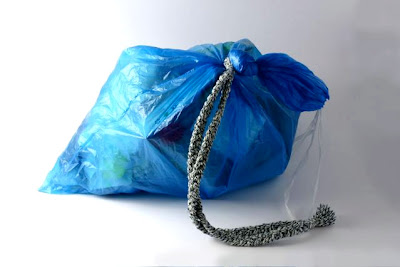
I’ve been making a lot of jewellery the last two months though, and no more larger objects that are too big to be jewellery. Those pieces are sitting quietly on a table to be stared at now and then. I’ve just made a huge pendant that is wearable and a lot bigger than any of the objects that are too big to be jewellery (pictured below). So now I’ve totally confused myself, ha ha, not really. I think this is all just part in parcel of my work, it intertwines and influences itself, and it doesn’t surprise me at all that I have to push that size boundary now and then. I recently read an article about Martino Gamper who is a designer/maker from southern Tirol but lives in London, he makes amazing work, and said that the functional side of his chairs is very important, OK they may not all be comfortable to sit on, but you can sit on them. So I read something like this and begin to feel on the one hand uncomfortable at my hesitant foray into larger things that you can’t wear, but recognise on the other hand that this is a necessary process in my research. It could very well be that this look at larger objects actually reconfirms my decision to be a jeweller.


Pendant, 2009 (Rubbish, rubbish bag, string)

What puts you in the mood to create?
I have two children so can't afford to hang around until the mood takes me, I've learned to put myself into the mood. This is usually done just by making, I begin whether I know what I´m doing or not, and on it goes from there.

What would your dream collaboration entail?
Stimulation, learning, social buzzyness, energy and excitement, no bullshit, satisfying result.

What is the biggest insult anyone has ever paid to your work?
'What a crock of shit', heard that from an old woman at an exhibition who didn´t know anyone could hear.

...and the biggest compliment?
Most recent one - '...it is so frigging amazing.
damn...best stuff i've seen......this book is to die for.'

And finally, what is the best piece of advice someone ever told you?
'Keep interested', Matthew von Sturmer told me that years ago.

Monday, 9 February 2009

On various things...


Here are some words from jeweller Lisa Walker. Born in Wellington, New Zealand, Lisa is now based in Germany. With an illustrious career spanning more than fifteen years, beginning with her first solo exhibition in 1993 in New Zealand, Lisa has since chalked up a jaw-droppingly long list of achievements (which also includes a collaboration in 2003 with next month's exhibitors, Chicks on Speed!) To read more about Lisa, visit our website for a list of further reading links.

For more images, visit our previous post. For even better images, come on down in person! Lisa's exhibition is on till 7 March, which leaves you plenty of time to procrastinate about coming, maybe dawdle a bit along the way, and then actually turn up. Ah don't we know the feeling...

Also, stay tuned for an upcoming Introducing... post on the inimitable Ms Walker. Coming to a Friday near you!


On sheep:

Every year I go back to New Zealand. It’s very present for me that I’m a foreigner in Germany, and there’s often this homeland lust. Germans often feel they have to mention sheep when I say I’m from New Zealand. They’re often surprised when I say that we have cities too! Sheep have become my personal NZ symbol, they’ve missed out a bit on becoming big icons like Vegemite, jandals, or kiwifruit.

If the metal brooch had been plastic I couldn’t have broken the sheep’s legs like that, so you could say the nature of the material dictated how it turned out.


-Lisa Walker, 1997


On life before Munich:

In 1991 I set up a basic jewellery workshop in the central Australian desert. The work I began there, mostly inspired by the colours, textures and forms of the desert, has strong connections to what I’m working on now.


The five ‘single’ pieces are a continued development of that work, incorporating eighteen months of discovery at my work bench, and influence from my new environment – Auckland city and the West Coast beaches and bush.


The ‘grouped’ pieces sprang from a desire to miniaturise the single forms I had already been working with and experiment with grouping them.


-Lisa Walker, 1993


A while ago I desperately wanted to solder - lots and lots of soldering. And I thought, shit, what does this mean? Has all this other work I’ve been doing just been a means of getting me further in my metal work? But after a couple of weeks I stopped soldering and went back to the other pieces. This happens now and then – a metal lust – but it doesn’t worry me any more. Instead of glue I have solder, and instead of wood or plastic, etc, I have metal, a whole different scene. The metal pieces I do now are very different than those I made a few years ago.


-Lisa Walker, 2000

On life after Munich:

Glue was one of the first new materials I worked with. It’s pretty much a goldsmith’s cheat material, you’re not really meant to use it, and if you do then very secretly. I had to ‘unlearn’ everything I’d learnt in my jewellery training (which was quite formal, when we needed silver we had to melt our own granules and make sheet or wire, lots of forging, I learnt a big respect for metal and its working processes). I made lots of stuff just out of glue, bashing and squeezing it just before it dried, scraping the drips off my table, things like that.


-Lisa Walker, 1996


The haberdashery, fabric and hobby departments of big department stores have lots of great weird materials (it’s also comfortable to shop there with the friendly old women behind the counters and the slow relaxed atmosphere), like all the things for handmaking teddy bears or dolls. Some materials I have no idea what they’re normally used for. Sometimes it’s because I don’t understand the German on the packets, or I don’t bother to find out, they just look like groovy materials.


-Lisa Walker, 1998

On New Zealand materials:

The rubber covered mussel shell brooch. I worked in a cafe in Munich where New Zealand mussels were on the menu. ‘The only thing you should ever do to a shell is drill a hole through it’, I was told in my jewellery training years ago.

Quite a bit of New Zealand applied art is about using natural materials. Nearly all of this is about the respect of nature. It drives you nuts after a while. You do have other choices when you work with those materials. You can be a bit mean and nasty (if it suits), ironic, challenging. Maybe there’s more to say than just respect for nature.


-Lisa Walker, 1997

On her 'Rubbish Brooches':

I worked with some materials from the rubbish bin in my workshop. I wouldn’t usually do this as for a material to actually reach the rubbish bin, really means it’s rubbish.


-Lisa Walker, 2004

On 'Under the Influence':

I consciously worked with ‘influence’, purposely using elements from other people's work in my own. This was exciting at first.


-Lisa Walker, 1998

On 'The Shapes I Used to Like':

I embrace now the forms I have always known.

From about 2006 there were older themes still being used. I have more demands on how a piece should look now. The strength a finished piece has, the quality it has, its presence, has become more important than before. The newer pieces I’m hesitant to put into the groups I began 8 or 10 years ago. They still have those initial starting points lurking around, but the emphasis in making them has changed. I’m just as interested in the presence and quality a piece has now, this is just as important as what I want to say.


-Lisa Walker, 2007

On Objects That Are Too Big To Be Jewellery:

The large new pieces that can’t be worn have come about as a reaction to my feeling of having to prove myself that I’m a real jeweller for so many years. I’ve proven it now, so perhaps I can try something else, or stretch jewellery’s limits in another way. I also now see my work as falling into the art bracket, so what does that awareness do to my work’s development? Other artists work in a variety of media and fields, can I do that too? Am I allowed to make an object that suggests jewellery but isn’t a piece of jewellery? I’ve always been so careful to land within the jewellery square, this has been very important for many years. What happens when I start to step outside of that? Where or how or when does the issue of sculpture come in? Do I have to be so careful? I have a lot of questions, and these pieces are about those questions.


-Lisa Walker, 2008

Thursday, 14 February 2008

W.E. McMillan Collection

Yesterday we posted about the gold and silversmithing exhibition, currently at RMIT's Project Space, and the floor talk held there.

Well, today we went to the floor talk, checked out the exhibition and we can categorically say that we really undersold it in our little post. It's a strong exhibition of a really vital collection for the craft and design sector. And, exciting for us here at CVHQ, the exhibition not only features work by Katherine Wheeler, but a whole bunch of ex-Fresh! winners and other Craft Victoria friends and luminaries.

We were quite proud to see works by 2007 Fresh! gals Natalia Milosz-Piekarska and Karla Way; 2004 Fresh! winner and upcoming exhibitor Jessica Morrison; Well-known Melbourne designer and upcoming exhibitor Anna Davern; Revered jeweller and gallery owner Mari Funaki, not to mention a great list of works by local jewellers, designers and craftpeople, all having graduated from RMIT's Gold and Silversmithing course over the years.

Robert Baines, Studio Co-ordinator from RMIT, spoke fondly of the collection and highlighted the amazing depth of talented 'smiths that Victoria produces.

As a resource for craft and design students and practitioners, as well as those interested in the discipline, the exhibition of the collection is a fantastic measure of the history of Victorian gold and silver work and well worth a visit.

For more information about the exhibition and the floor talks, head to the Project Space website.

Wednesday, 13 February 2008

Fresh! artist talks


Katherine Wheeler's White Series, 2007 as seen in Fresh!


Finalist from Craft Victoria's Fresh! Award in 2007, Katherine Wheeler is currently exhibiting in the W.E. McMillan Collection exhibition at the RMIT Project Space/Spare Room, which is great news.


Even more exciting news is the fact there's a fantastic Floor Talk tomorrow (Thursday) 14th February at the RMIT gallery between 12 and 1pm, which discusses the works and the history of Gold and Silversmithing from 1962-2007.